
Breathe to Inspire: Turning Anxiety into Presence
By Margie Zohn
“Relaxation is the soul of the art, because it arouses receptivity rather than defensiveness in an audience.”
— Arthur Miller, On Politics and the Art of Acting
Arthur Miller, a master observer of human truth, didn’t need data to back up his point: when a performer is relaxed, the audience relaxes too. In communication, as in theatre, tension is contagious.
Science has since proven Miller right. Mirror neurons—the brain’s empathy circuitry—fire when we observe someone else doing or feeling something, as if we ourselves were doing or feeling it. In other words, your state of being is broadcast instantly to your audience.
So, if you want people to feel calm and receptive, you must first feel calm yourself.
The Physiology of Fear
Of course, calm is the last thing most of us feel when we’re speaking in public.
For many, getting up to present triggers a full fight-or-flight response: elevated heart rate, sweaty palms, dry mouth, and that jittery sense of “I know my content, but my brain just left the building.”
That reaction is our biology doing its job—protecting us from threats. It’s just that a boardroom or auditorium isn’t a bear in the woods. Still, the stress response diverts blood flow from the parts of the brain we most need for communication: reasoning, creativity, and empathy.
The result? We can’t think clearly, connect authentically, or lead persuasively.
Introducing Purposeful Tension
But here’s the catch: complete relaxation isn’t the goal either.
When you’re trying to rally a team, pitch investors, or deliver a vision, you don’t want an audience that’s half-asleep—you want one that’s alive and responsive.
That’s where I introduce the concept of Purposeful Tension—a state of focused energy that channels nervousness into expression, conviction, and presence.
Think of it like “eustress,” the positive form of stress that drives athletes to peak performance. Purposeful tension isn’t about eliminating nerves; it’s about directing the energy where it matters—into your message and your audience.
And because of those same mirror neurons, when you embody purposeful tension instead of panic, your audience feels energized and engaged—not anxious.
How to Shift from Fight-or-Flight to Purposeful Tension
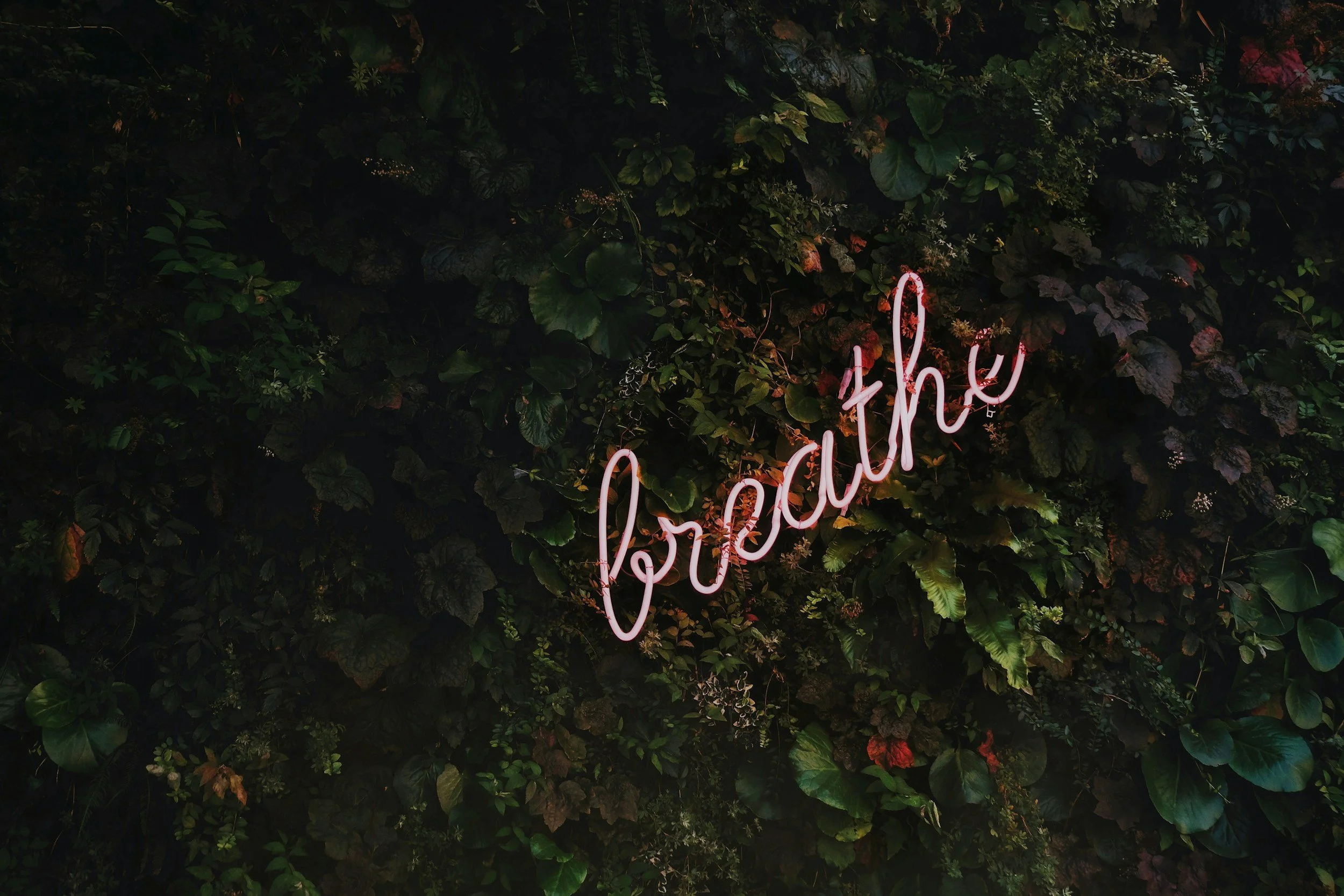
The fastest, most reliable way to do this? Breathe.
Deep, diaphragmatic breathing resets the body’s stress response and brings oxygen (and calm) back to the brain. It’s also the simplest way to reconnect with your physical and emotional center.
Most of us think we’re breathing deeply when we’re really just expanding our chests. True diaphragmatic breathing draws the breath lower—into the ribs and belly. When you inhale, your abdomen expands; when you exhale, it releases.
You can practice this in small ways:
Try the “straw test.” Inhale slowly as if sipping air through a straw, feeling your belly expand.
Lie on your back and place a hand on your abdomen. Watch it rise and fall as you breathe.
Before your next presentation, take three slow breaths, each one lower and deeper than the last.
In a few minutes, your physiology shifts from threat to presence.
Even When You Go Blank
If you blank out mid-presentation—a moment every speaker knows—return to your breath. Within an instant, you’ll re-engage your higher brain function and recover your composure (and you’ll look like you’re taking a pause to think deep thoughts while you do it!).
The word inspiration shares its Latin root with respiration for a reason. Each breath you take is literally an act of inspiration—one that can ground you and ignite your creativity at the same time.
And when you breathe with intention, you don’t just calm yourself—you invite your audience to breathe with you.
That’s how leaders transform fear into focus, tension into purpose, and information into inspiration.